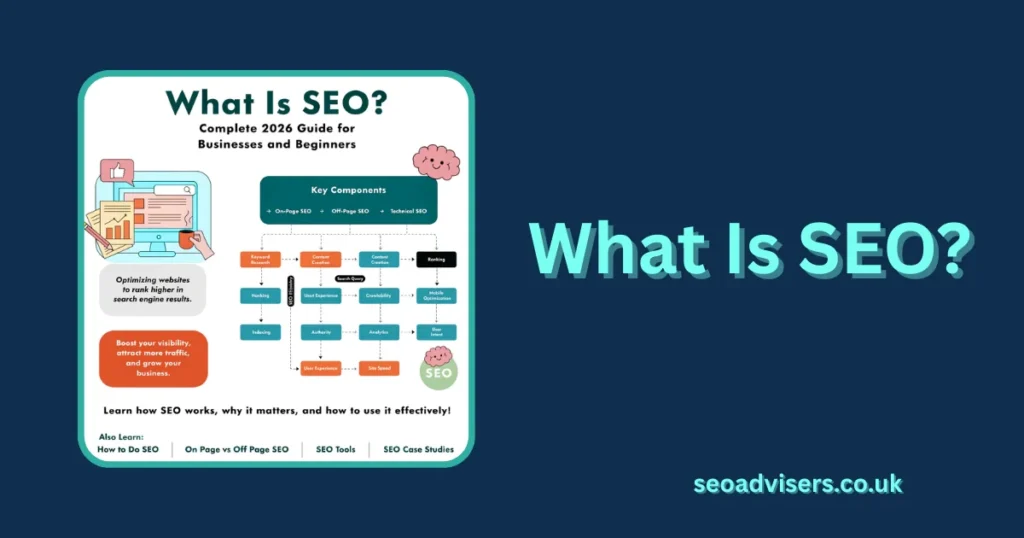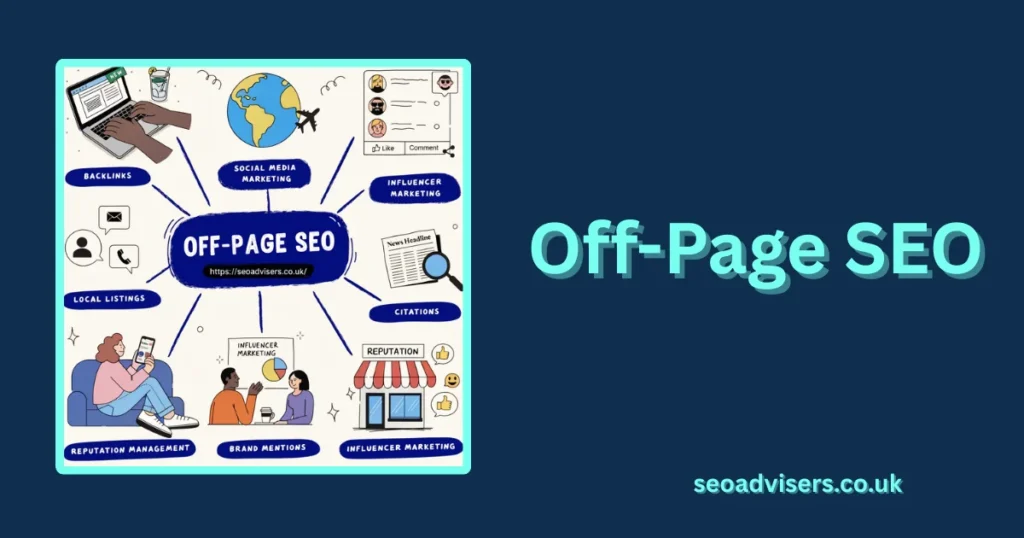
On-page SEO is the foundation of any effective search engine optimization strategy. It refers to optimizing individual web pages to rank higher in search engines and drive relevant traffic. Unlike off-page SEO, which focuses on external signals like backlinks, on-page SEO focuses on elements that are directly under your control on your website.
By understanding the importance of on-page SEO and implementing best practices, you can ensure your website delivers value to users while meeting search engine requirements. This guide covers everything from basic techniques to advanced strategies that include user experience, AI optimization, and E-E-A-T principles.
Core Components of On-Page SEO
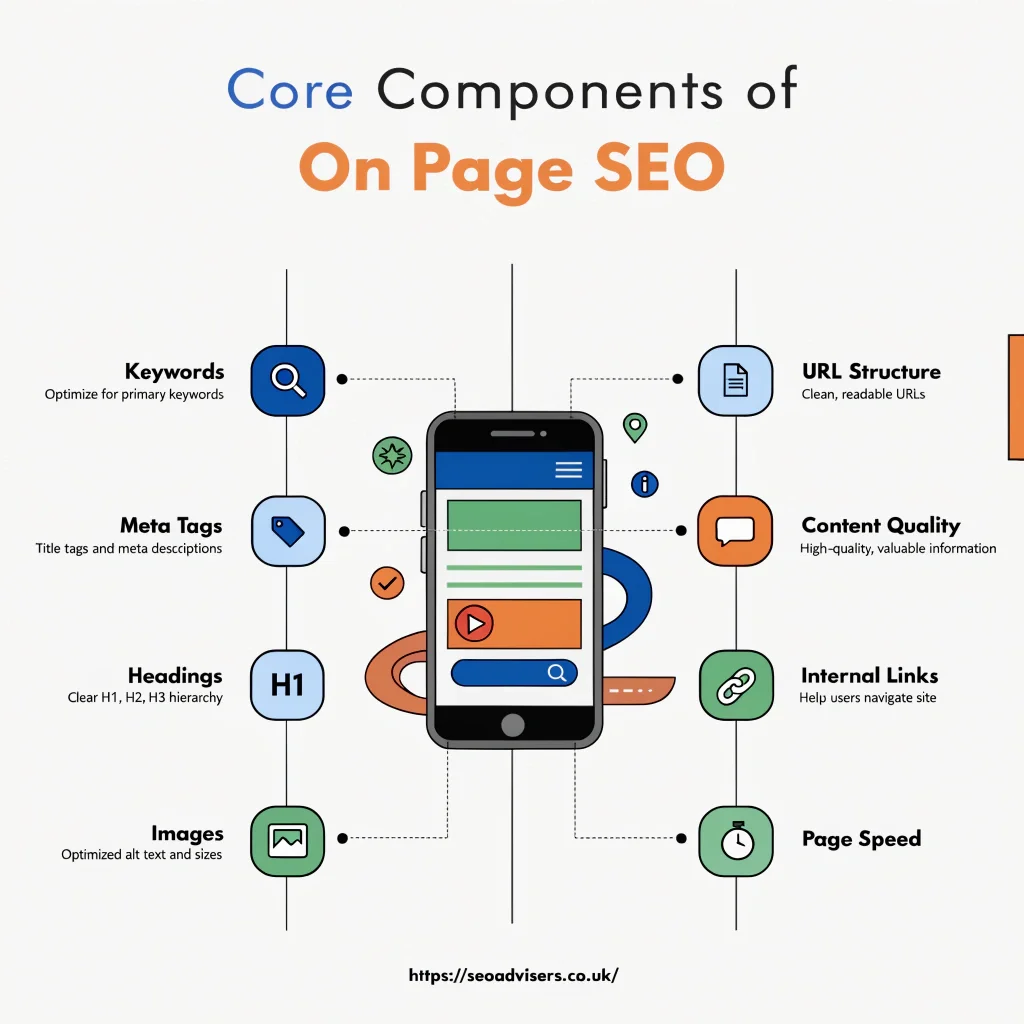
Optimizing your pages effectively requires attention to several critical components. Each element contributes to a stronger search presence and improved user engagement.
Title Tags Optimization
Title tags are one of the first things search engines and users notice. They should include the primary keyword in On Page SEO naturally, while remaining compelling and under 60 characters. Using long-tail keywords like On Page SEO checklist or On Page SEO guide for beginners can help improve CTR.
Meta Descriptions Best Practices
A well-crafted meta description increases click-through rates from search results. Include your primary and secondary keywords while ensuring the description provides value to the reader. Example: “Learn how On Page SEO impacts rankings and discover actionable steps to optimize your pages with this comprehensive guide.”
Header Tags (H1, H2, H3) Structure
Header tags organize your content, making it readable for both users and search engines. H1 should contain the main keyword On Page SEO, once. H2 and H3 tags can include secondary keywords such as title tags, meta description, internal linking, and URL structure. Using semantic long-tail keywords like On Page SEO strategies for beginners in H3 subheadings can improve topical relevance.
URL Structure and Best Practices
Short, descriptive URLs that include keywords improve readability and SEO. For example, www.example.com/on-page-seo-checklist is better than www.example.com/page1. Use hyphens to separate words and avoid unnecessary parameters.
Keyword Placement and Density
Integrate your primary, secondary, and long-tail keywords naturally throughout your content. Focus on user experience and readability rather than overstuffing. Aim for around 1-2% keyword density for On Page SEO, sprinkled across headings, paragraphs, and alt text.
Internal Linking Strategy
Linking relevant pages within your site strengthens topical authority. Use descriptive anchor texts such as On Page SEO guide or On Page SEO techniques to help search engines understand your content hierarchy.
Image Optimization and Alt Text
Images enhance user engagement and break up long text. Optimize images for fast loading and include alt text with primary or secondary keywords. For example, “On Page SEO checklist visual” can be used as alt text.
Content Readability and Formatting
Readable content is essential for user experience and SEO. Use short paragraphs, bullet points, tables, and subheadings to improve clarity. Tools like Hemingway or Grammarly can help ensure the content is accessible for a wide audience.
Advanced On-Page SEO Factors
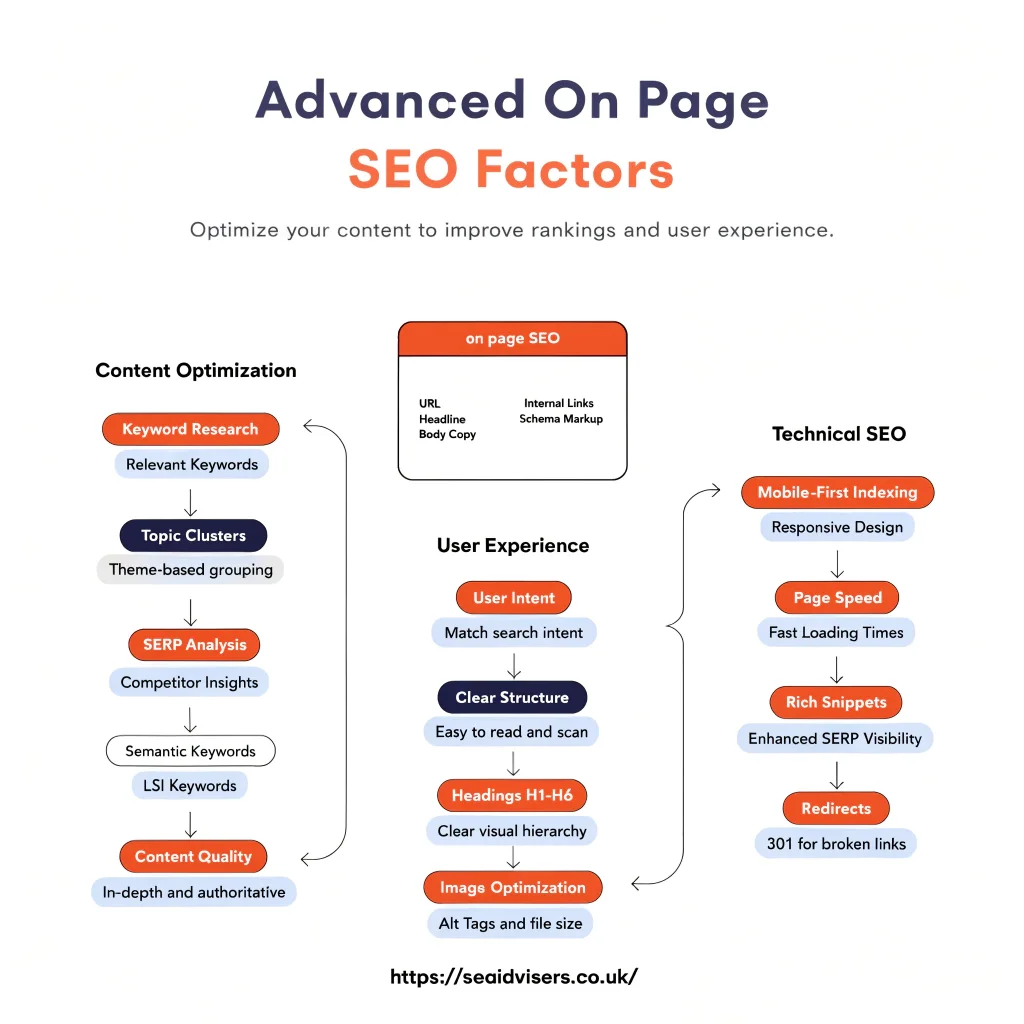
Beyond the basics, advanced factors can give your website a competitive edge.
Core Web Vitals and Page Speed Optimization
Search engines prioritize pages with fast loading times and smooth interactivity. Optimize images, leverage caching, and use a content delivery network to improve performance.
Mobile-First Indexing and Mobile Optimization
With mobile-first indexing, search engines predominantly use the mobile version of your site. Ensure your site is fully responsive and offers a seamless experience on all devices.
Structured Data and Schema Markup
Schema markup helps search engines understand your content better and enables rich snippets in search results. Implement FAQ schema, article schema, or product schema depending on your page type.
Semantic SEO and LSI Keywords
Using semantically related keywords improves relevance and helps your content cover a topic comprehensively. Incorporate terms like title optimization, content structure, and keyword clustering naturally.
E-E-A-T Signals
Experience, expertise, authoritativeness, and trustworthiness are increasingly important. Include author bios, citations, references, and verified data to signal credibility to search engines.
AI-Driven SEO Considerations
With AI-driven search engines, content that demonstrates value, intent alignment, and topical depth ranks better. Consider user intent and provide comprehensive answers that address queries fully.
User Experience (UX) Factors
Engagement metrics like time on page, bounce rate, and scroll depth influence rankings. Ensure easy navigation, fast loading, and interactive content elements.
On Page SEO Checklist
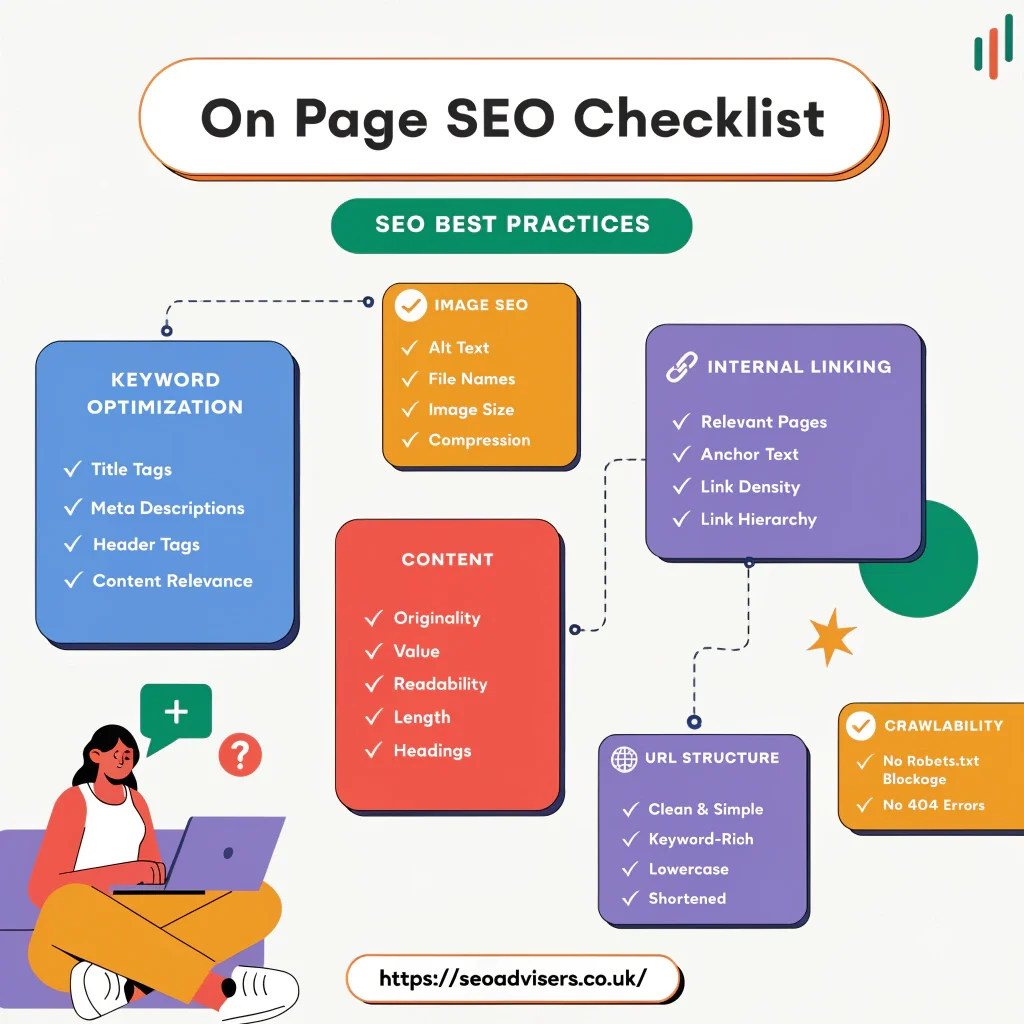
Here is a practical checklist for implementing on-page SEO on your website:
| Task | Description | Status |
| Title Tag | Include primary keyword, under 60 characters | ✅ |
| Meta Description | Use a keyword, compelling description, under 160 characters | ✅ |
| Header Tags | Organize H1-H3, including primary and secondary keywords | ✅ |
| URL Structure | Short, descriptive, keyword-rich | ✅ |
| Keyword Placement | Naturally, in content, headings, and alt text | ✅ |
| Internal Linking | Use descriptive anchors, link to relevant pages | ✅ |
| Image Optimization | Compress images, use keyword-rich alt text | ✅ |
| Page Speed | Optimize images, caching, and fast hosting | ✅ |
| Mobile Optimization | Fully responsive, smooth mobile UX | ✅ |
| Schema Markup | Implement FAQ or article schema | ✅ |
| Content Readability | Use short paragraphs, bullet points, and tables | ✅ |
Common On-Page SEO Mistakes and How to Avoid Them
- Duplicate or thin content: Ensure each page has unique, high-quality content.
- Ignoring internal linking: Link related pages to improve topical authority.
- Overstuffing keywords: Focus on readability; natural usage of on-page SEO is sufficient.
- Poor mobile UX: Test your site on multiple devices for smooth navigation.
- Slow page load times: Optimize images, scripts, and hosting to improve speed.
Tools for On-Page SEO Optimization
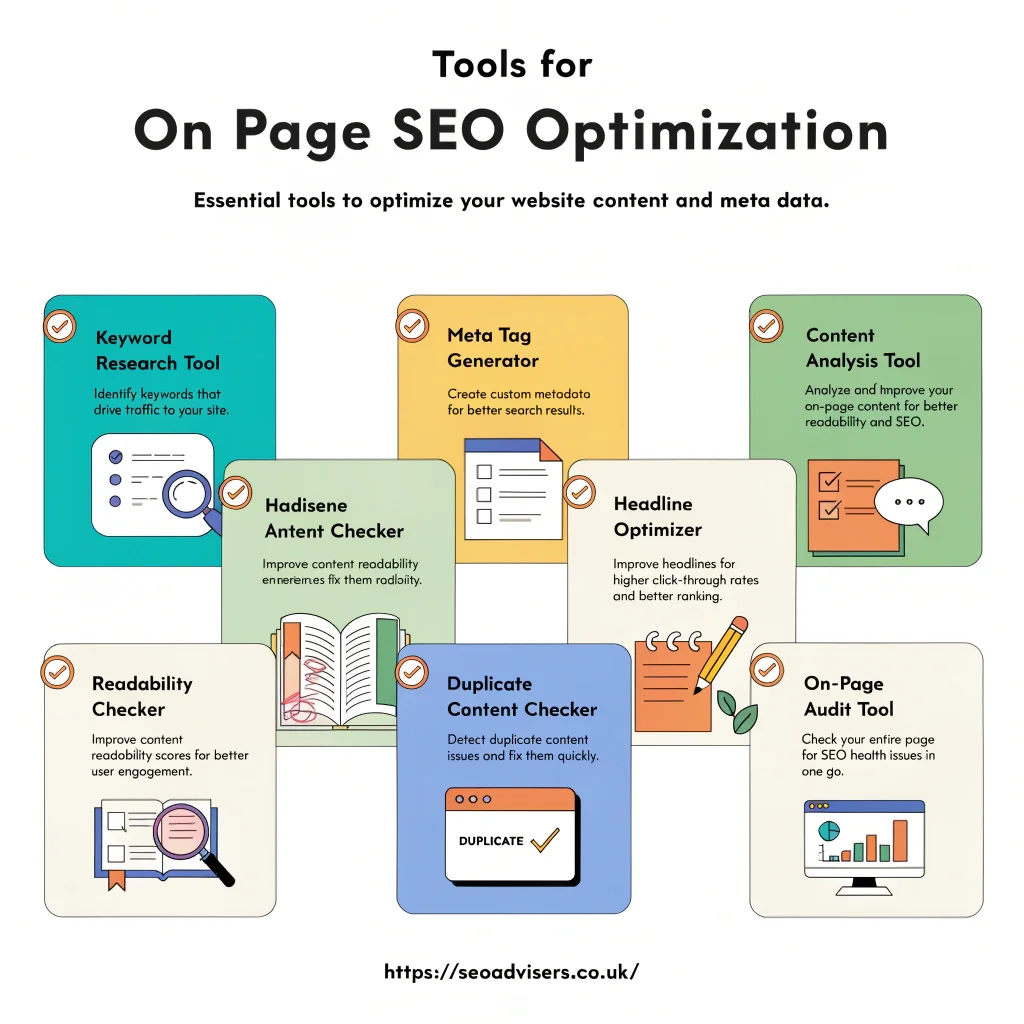
| Tool | Purpose |
| Google Search Console | Monitor page performance and indexing |
| Ahrefs | Keyword research and backlink analysis |
| SEMrush | Competitor research, keyword tracking |
| Mangools | SEO analytics and site audit |
| Moz | Page optimization and domain authority |
| Screaming Frog | Technical site audits |
| PageSpeed Insights | Optimize page speed |
| AI Writing Tools | Create and optimize content with keyword integration |
Case Studies and Examples
- Example 1: A website optimized using the On-Page SEO checklist improved organic traffic by 40% in 3 months.
- Example 2: Updating header tags, meta descriptions, and internal linking led to a 25% improvement in ranking for primary keywords.
Conclusion
On Page SEO is the cornerstone of website optimization. By following this guide, implementing the checklist, and leveraging both basic and advanced strategies, you can ensure higher rankings, better user engagement, and improved website performance.
Start implementing today and monitor results for continuous improvement.
Frequency Ask Question About On-Page SEO
Q1. How long does it take for On-Page SEO changes to show results?
Typically, changes start showing results in 1–3 months depending on competition and website authority.
Q2. Is On Page SEO more important than Off-Page SEO?
Both are important. On-Page SEO ensures your site is optimized for search engines, while Off-Page SEO builds authority and backlinks
Q3. How often should On-Page SEO be updated?
Regular audits every 3–6 months are recommended to keep content fresh, update keywords, and improve user experience.