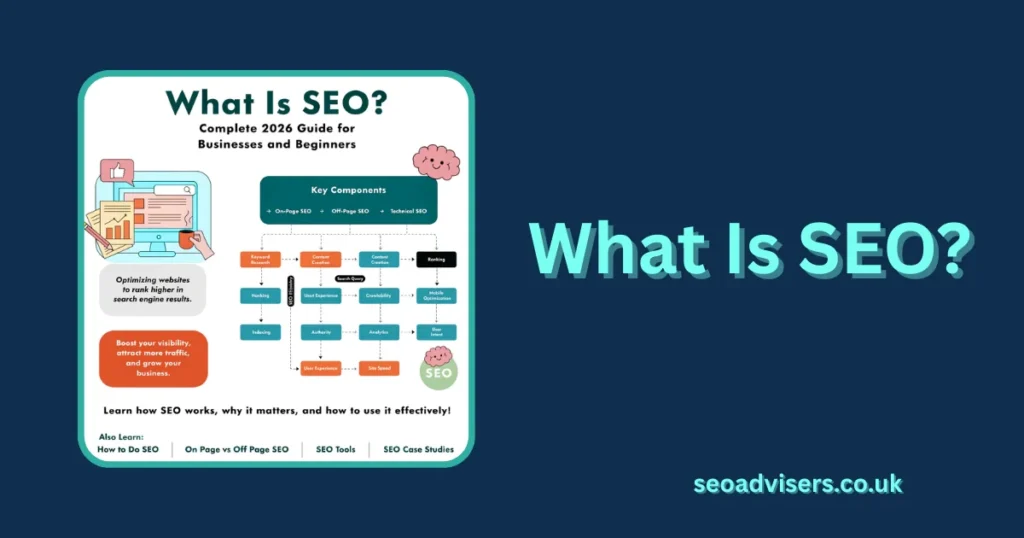
What Is Technical SEO?
Technical SEO refers to the process of optimizing a website’s infrastructure so that search engines can crawl, render, index, and rank it efficiently. While on-page SEO focuses on content and off-page SEO emphasizes backlinks, Technical SEO ensures that your website’s foundation is strong enough to support both.
Search engines rely on structured systems to evaluate websites. If your site has crawl errors, duplicate content issues, broken internal links, or poor page speed optimization, your rankings will suffer regardless of how strong your content is.
In simple terms, Technical SEO focuses on:
- Crawlability and indexability
- XML sitemap optimization
- Robots.txt configuration
- Canonical tags
- Redirect management
- Core Web Vitals
- Structured data implementation
- Mobile first indexing
- HTTPS security
- Server response codes
Without these elements properly configured, search engine bots may struggle to understand your website.
How Search Engines Actually Work
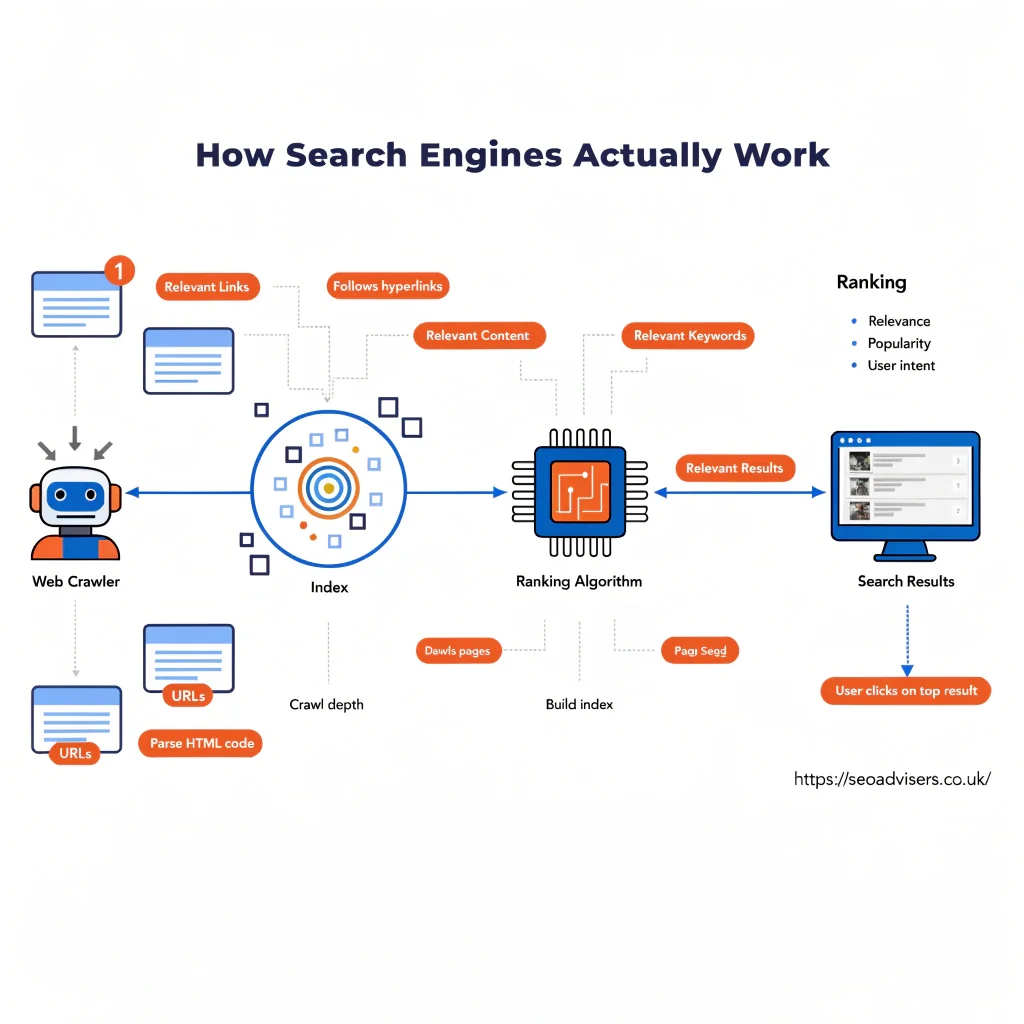
Before improving your website, it is essential to understand how search engines operate.
Crawling
Crawling is the discovery phase. Search engine bots scan websites by following links. If your internal linking structure is weak or your robots.txt blocks important pages, bots may never find your content.
Crawl budget also plays a critical role. Crawl budget optimization ensures search engines spend time on important pages instead of duplicate or thin content.
Rendering
Modern websites use JavaScript, which can sometimes prevent bots from properly rendering content. JavaScript SEO best practices and dynamic rendering help ensure search engines see your content correctly.
Indexing
After crawling, search engines decide whether to index a page. Indexability depends on canonical tags, noindex directives, duplicate content handling, and structured content clarity.
Ranking
Ranking is influenced by hundreds of signals, including page speed optimization, mobile friendliness, internal linking, and structured data.
Understanding crawling vs indexing is crucial. Many websites are crawled but not indexed due to technical issues.
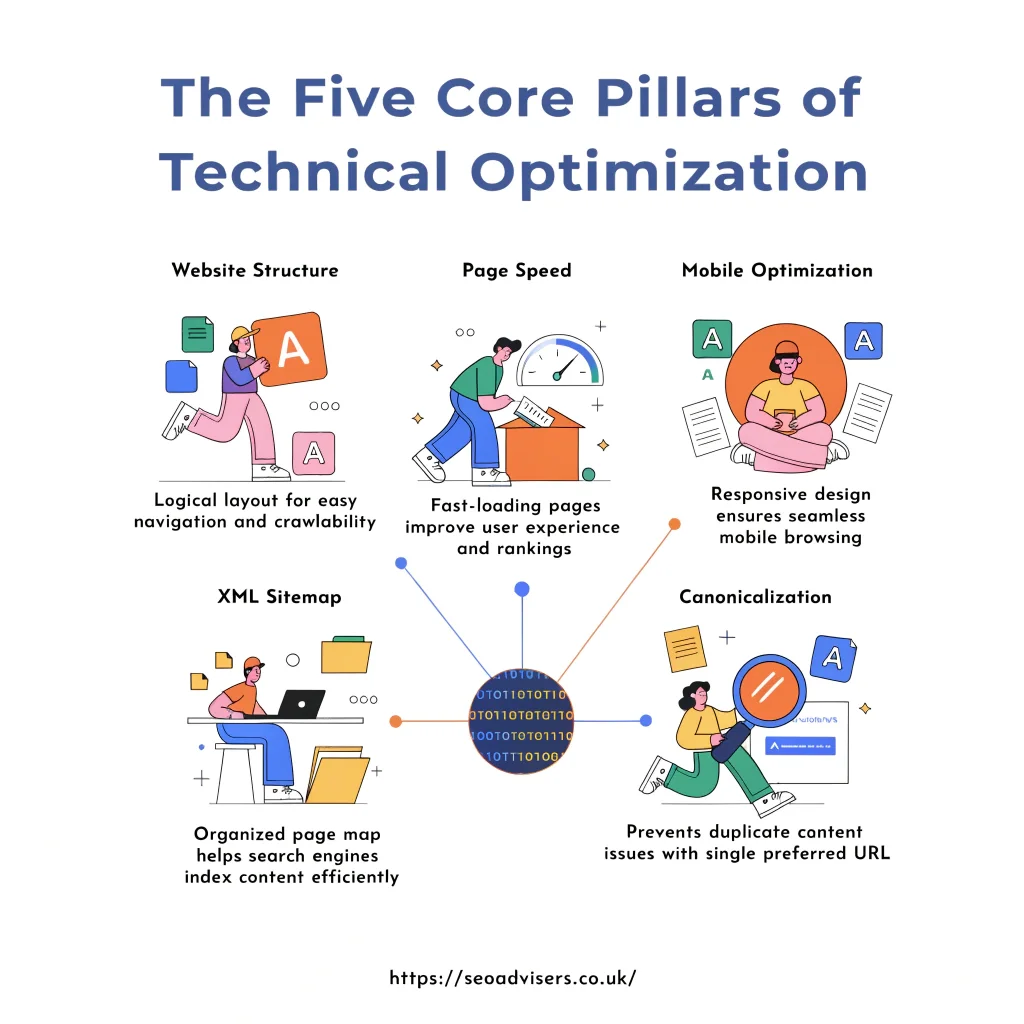
The Five Core Pillars of Technical Optimization
Pillar 1: Crawlability
Improving crawlability ensures bots can access your website efficiently.
Key components include:
- Robots.txt optimization
- XML sitemap structure
- Crawl depth control
- Internal linking strategy
- Crawl budget optimization techniques
A well-structured XML sitemap guides search engines to priority pages. Avoid listing noindex URLs in your sitemap. Maintain consistency between your sitemap and canonical tags.
Also, eliminate redirect chains and broken internal links. These waste crawl budget and reduce efficiency.
Pillar 2: Indexability
Indexability determines whether pages are stored in search engine databases.
Important elements:
- Canonical self-referencing tags
- Noindex management
- Duplicate content resolution
- Pagination best practices
- Index control strategies
Duplicate content can confuse search engines. Proper canonicalization signals which version should rank.
Monitor your index coverage report to identify pages excluded from indexing.
Pillar 3: Site Architecture
Website architecture influences crawl depth and user experience.
Best practices include:
- Flat site structure
- Clear URL structure
- Breadcrumb navigation
- Hub and spoke content model
- Logical internal linking structure
Avoid deep architecture where important pages require many clicks to access. Crawl depth impacts discoverability.
Well-designed site architecture supports scalable SEO growth.
Pillar 4: Website Performance
Performance has become a direct ranking factor.
Focus on:
- Core Web Vitals
- Largest Contentful Paint
- Time to First Byte
- Page speed optimization
- HTTP status codes
- Mobile first indexing
- HTTPS security
Slow websites increase bounce rate and reduce crawl efficiency. Server response codes such as 404, 301, 302, and 500 must be monitored.
Improving image compression, caching, and hosting quality significantly enhances performance.
Pillar 5: Structured Data and SERP Enhancement
Structured data markup helps search engines understand your content context.
Implement:
- Schema markup
- Rich results optimization
- Hreflang for international SEO
- Structured data testing
- Snippet optimization
Structured data improves visibility through rich snippets and enhanced search features.
International websites must implement hreflang correctly to avoid duplicate indexing across regions.
Advanced Technical Strategies
Most guides stop at basics, but advanced strategies provide a competitive advantage.
Log File Analysis
Log file analysis reveals how search engine bots interact with your website. It helps identify crawl inefficiencies and wasted crawl budget.
JavaScript SEO
Ensure important content loads without relying exclusively on client-side rendering. Use pre-rendering solutions if necessary.
Dynamic Rendering
Dynamic rendering serves search engines a static HTML version while users see a dynamic experience.
Edge SEO
Edge SEO uses CDN-based optimizations to modify site elements without changing core code.
Enterprise SEO
Large websites must prioritize index control strategies, sitemap segmentation, and crawl depth management.
Technical SEO Audit: Step-by-Step Framework
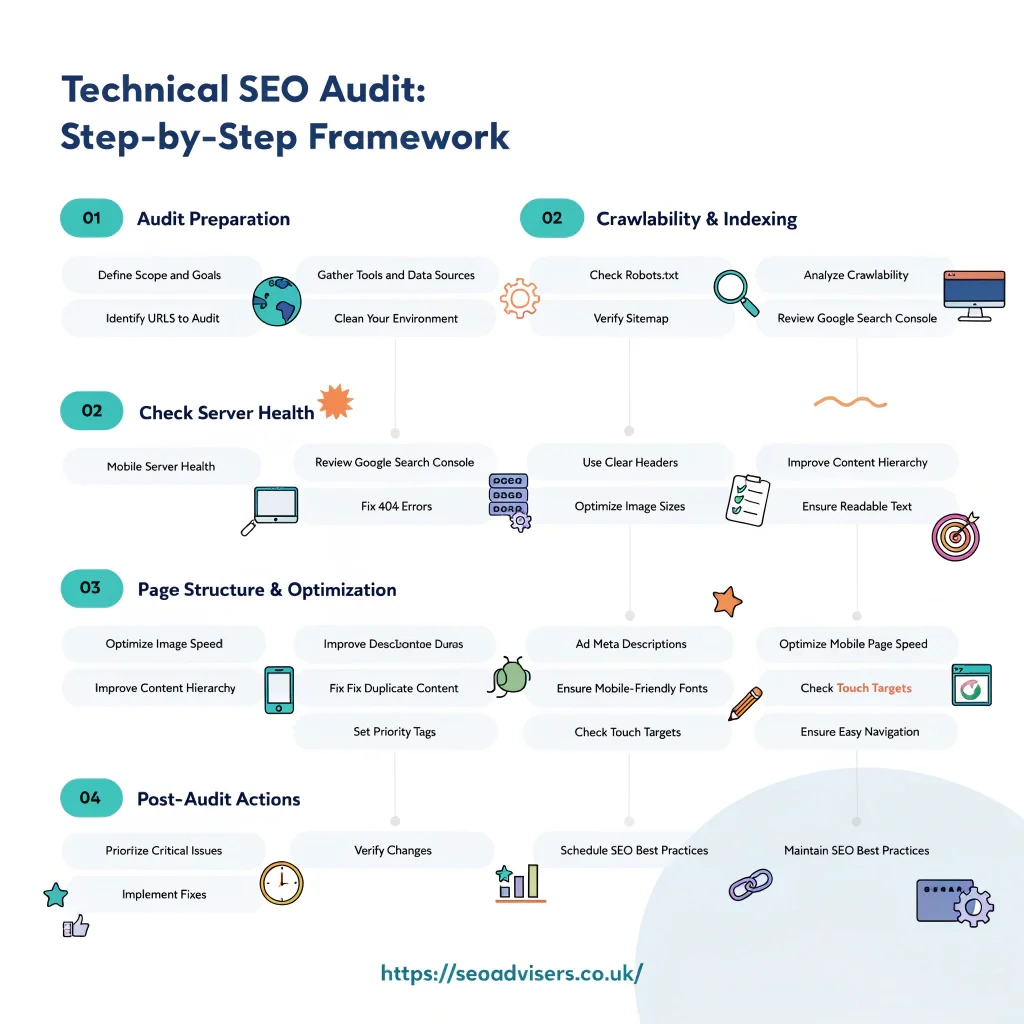
A technical SEO audit identifies and fixes performance bottlenecks.
Step 1: Crawl the Website
Use SEO audit tools to analyze crawl errors, broken links, duplicate titles, and redirect chains.
Step 2: Analyze Index Coverage
Check indexed pages vs submitted pages. Identify noindex errors and canonical conflicts.
Step 3: Evaluate Performance Metrics
Measure Core Web Vitals and server response codes.
Step 4: Review Structured Data
Validate schema markup and rich results eligibility.
Step 5: Optimize Internal Linking
Identify orphan pages and improve the internal linking structure.
Step 6: Monitor and Re-Crawl
Continuous monitoring ensures long-term stability.
A technical SEO checklist should be updated quarterly.
Technical SEO KPIs and Metrics
Tracking performance is essential.
Important KPIs include:
- Crawl efficiency score
- Index ratio
- Time to First Byte
- Largest Contentful Paint
- Technical debt score
- SEO health score
Technical debt accumulates when issues remain unresolved. Regular audits prevent long term damage.
Monitoring these technical SEO metrics ensures consistent growth.
Technical Optimization for Different Platforms
WordPress
Optimize plugins, XML sitemap generation, canonical tags, and image compression.
Shopify
Control duplicate product URLs, manage canonicalization, and improve site speed.
Custom Websites
Focus on server response codes, JavaScript SEO, and structured data implementation.
SaaS Websites
Manage dynamic pages, login barriers, and scalable architecture.
Each platform requires tailored strategies.
Common Technical SEO Mistakes
Avoid these errors:
- Redirect chains
- Incorrect canonical tags
- Broken internal links
- Thin crawlable pages
- Improper robots.txt blocking
- Sitemap inconsistencies
- Pagination errors
Fixing crawl errors often results in immediate improvements.
Technical SEO Checklist for 2026
Beginner Checklist:
- Submit XML sitemap
- Configure robots.txt
- Fix broken links
- Enable HTTPS
Advanced Checklist:
- Analyze crawl budget
- Implement structured data
- Optimize Core Web Vitals
- Monitor index coverage
Enterprise Checklist:
- Conduct log file analysis
- Segment sitemaps
- Manage international SEO with hreflang
- Track crawl depth
A structured checklist ensures no element is overlooked.
The Future of Technical SEO
Search engines are evolving toward AI-powered search experiences.
Future trends include:
- Automation in SEO audits
- Real-time performance optimization
- AI-driven crawling
- Enhanced structured data interpretation
Websites must prioritize clean architecture, strong performance, and advanced markup to stay competitive.
As algorithms evolve, foundational Technical SEO remains essential.
Final Thoughts
A successful website is built on a strong technical foundation. Content and backlinks cannot compensate for poor crawlability, slow performance, or indexing issues.
By implementing proper site architecture, improving crawl budget efficiency, optimizing Core Web Vitals, and conducting regular audits, you create a scalable SEO ecosystem.
If you want sustainable rankings, consistent traffic growth, and long term authority, investing in Technical SEO is not optional. It is essential.
Frequently Asked Questions
Q1. What is Technical SEO?
Technical SEO focuses on optimizing a website’s infrastructure so search engines can crawl and index it effectively.
Q2. How often should I perform a technical SEO audit?
Run a comprehensive audit every three to six months and monitor KPIs monthly.
Q3. Is technical SEO difficult?
It requires strategic planning, but with proper checklists and tools, it becomes manageable.
Q4. Does technical SEO improve rankings?
Yes. Fixing crawl errors, improving page speed, and enhancing structured data directly impact visibility.