Local SEO is the process of optimizing a business to appear in local search results, especially in Google Maps and geographically targeted organic listings. When users search for services such as dentist near me or plumber in London, search engines display businesses based on relevance, distance, and prominence.
Unlike traditional SEO which focuses on global visibility, local search engine optimization prioritizes geographic intent. This means your visibility depends on your Google Business Profile, citations, reviews, and location relevance signals.
Search engines evaluate:
- Business relevance to the query
- Physical proximity to the searcher
- Authority and trust signals
- Behavioral signals such as clicks and engagement
To rank effectively, you must optimize for both the Map Pack and organic local search results.
Why Local SEO Matters More Than Ever

Local search behavior has evolved rapidly. Consumers now rely on Google Maps, voice search, and mobile devices to discover services nearby.
Key Local Search Trends
| Trend | Impact on Rankings |
| Near me searches | High transactional intent |
| Mobile first indexing | Faster websites rank better |
| Voice search queries | Conversational keywords matter |
| Map Pack dominance | Top 3 listings capture majority clicks |
Businesses that ignore local ranking factors lose visibility to competitors who invest in Google Business Profile optimization, local citations, and review management.
Understanding Google’s Local Search Ecosystem
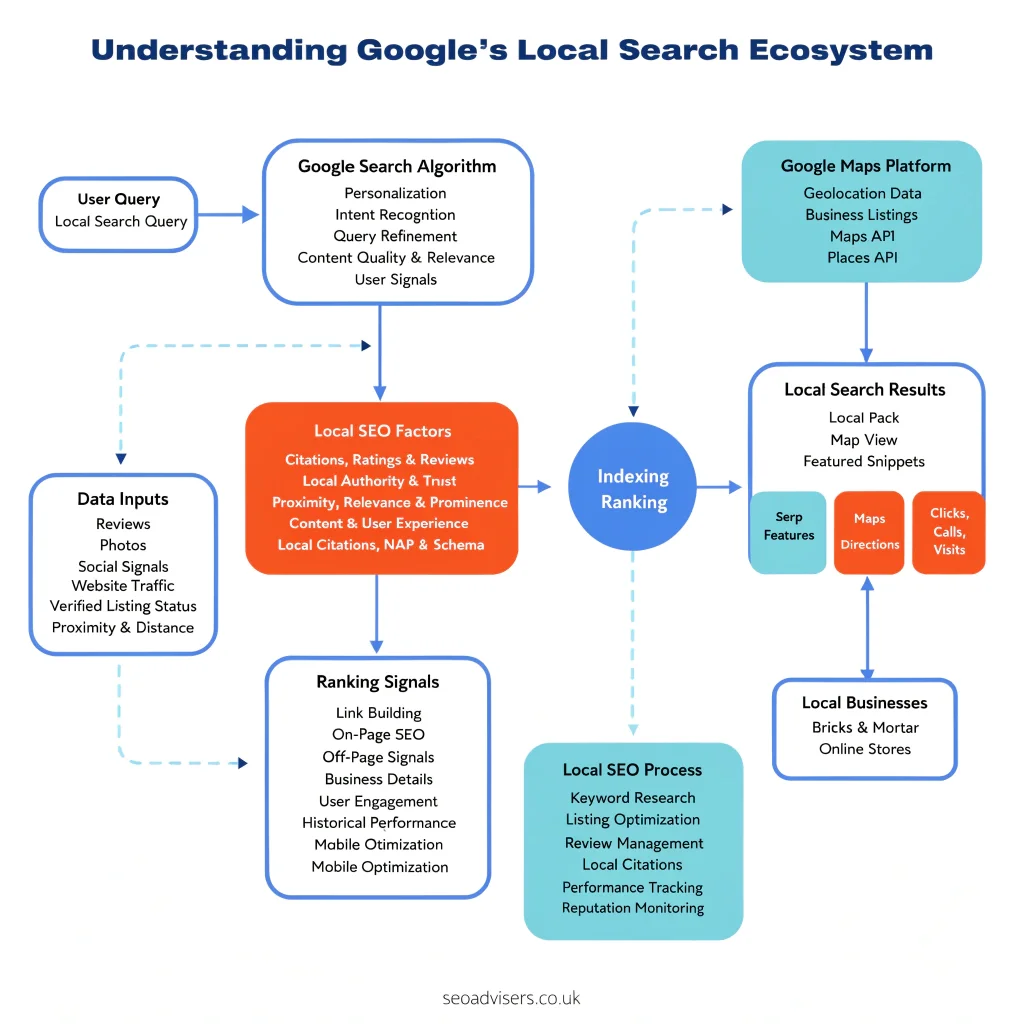
To rank properly, you must understand how the local search ecosystem functions.
Local Pack vs Organic Results
The Local Pack appears above organic listings and typically shows three businesses. Below that, organic local search results display traditional web pages.
| Feature | Local Pack | Organic Results |
| Platform | Google Maps integration | Standard search |
| Ranking Factors | GBP, reviews, proximity | Content, backlinks |
| Click Behavior | High immediate conversion | Research intent |
Optimizing for both increases total visibility.
Google Maps Algorithm Explained
Google Maps prioritizes three core signals:
- Relevance
- Distance
- Prominence
Prominence includes backlinks, citations, online reviews, and brand mentions.
Behavioral Signals
Search engines analyze:
- Click through rate
- Direction requests
- Calls from profile
- Time spent on website
Improving engagement strengthens authority and ranking consistency.
Complete Local Ranking Factors Framework
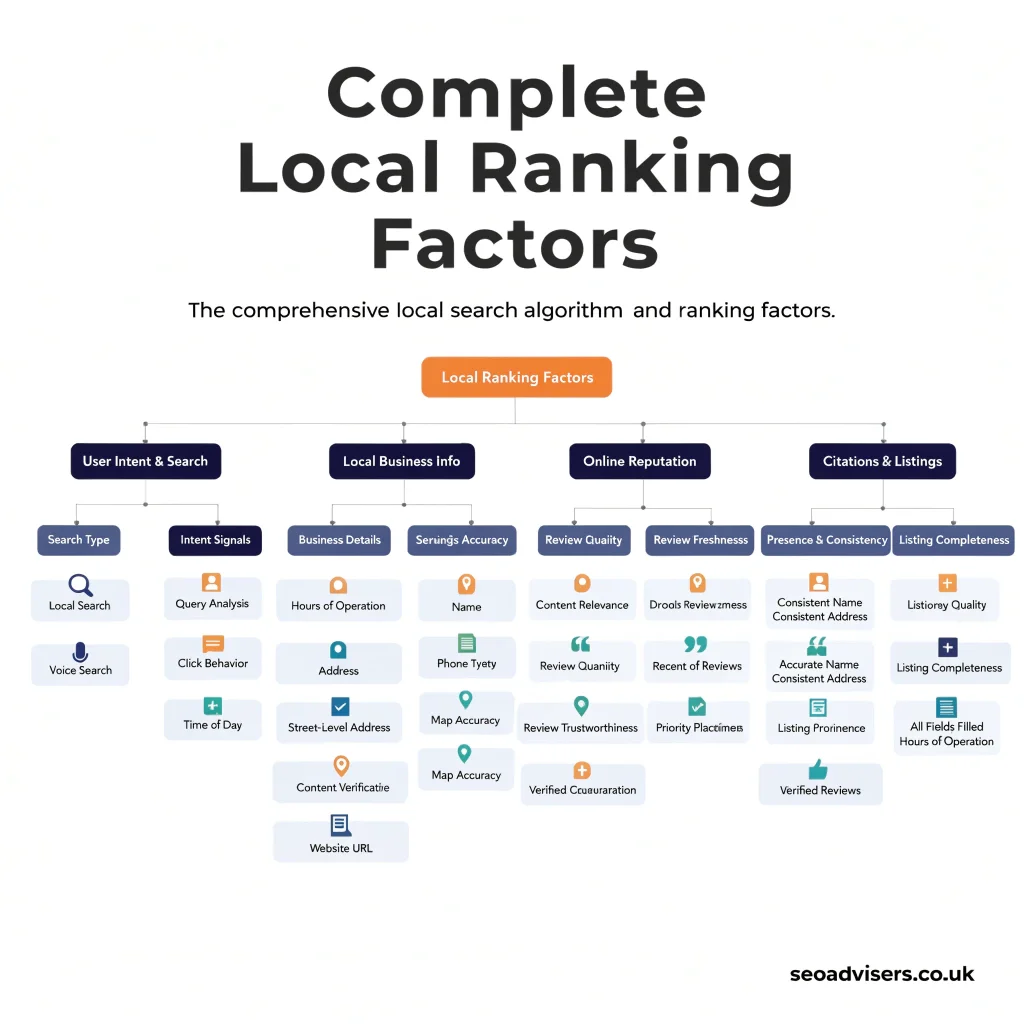
Below is a structured ranking factor overview.
| Category | Signals Included |
| Google Business Profile | Categories, services, posts, photos |
| On Page SEO | Location pages, internal linking, schema markup |
| Citations | NAP consistency, directories |
| Reviews | Quantity, velocity, rating |
| Backlinks | Local link building |
| Behavioral Signals | CTR, dwell time |
Google Business Profile Signals
Your Google Business Profile must be:
- Fully completed
- Accurate with NAP consistency
- Optimized with correct primary and secondary categories
- Updated with weekly posts
- Enhanced with geo relevant images
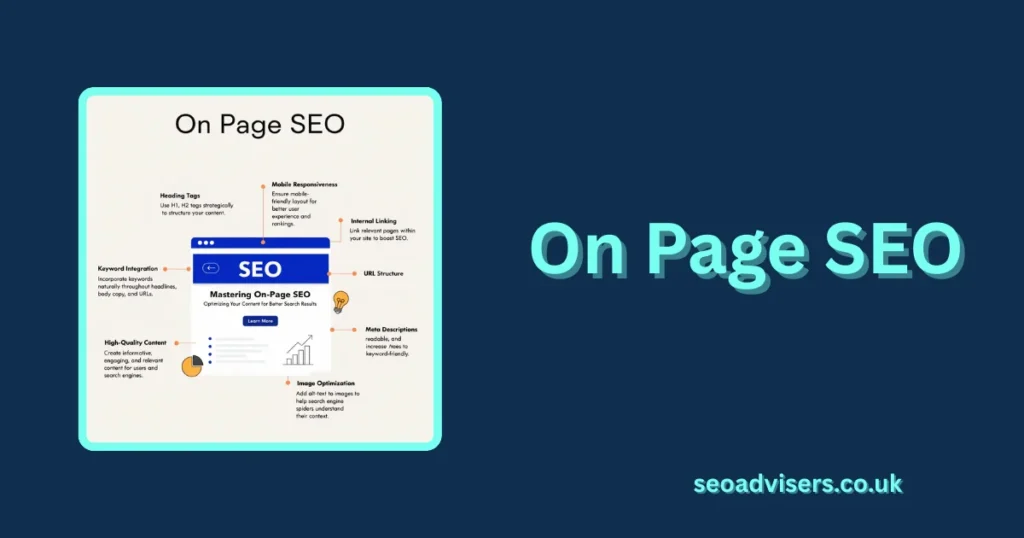
On Page Local Signals
Location landing pages must include:
- Service plus city keywords
- Embedded Google Map
- Structured LocalBusiness schema markup
- Optimized title tags
- Neighborhood keywords
Citation Signals
Citations validate business information across directories.
Two types:
- Structured citations such as Yelp
- Unstructured citations such as blog mentions
Consistency strengthens trust.
Review Signals
Reviews influence both ranking and conversion.
Best practices:
- Encourage authentic reviews
- Respond to every review
- Include service keywords naturally in responses
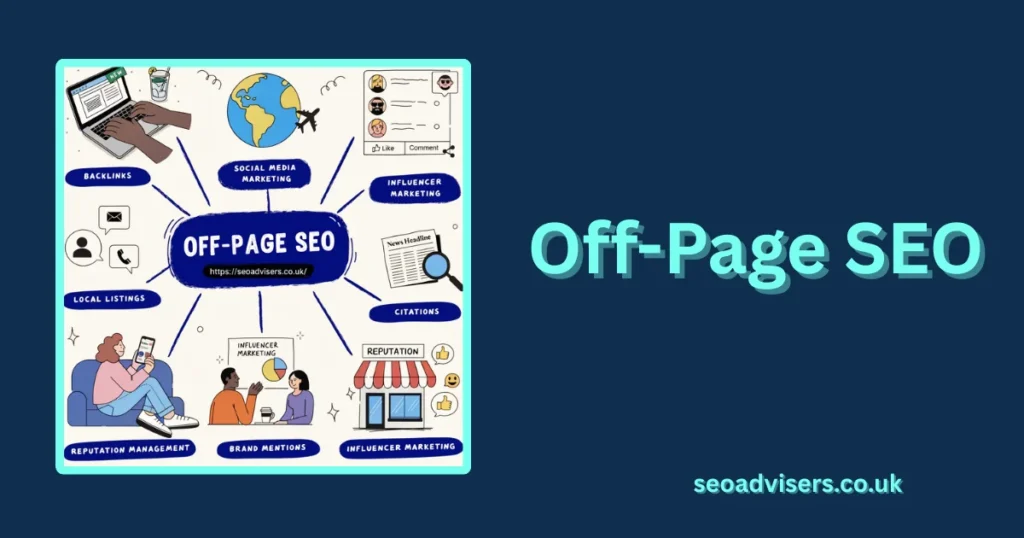
Link and Authority Signals
Local backlinks from:
- Community blogs
- Sponsorships
- Local PR campaigns
- Resource pages
These improve prominence.
Advanced Local Keyword Research Strategy
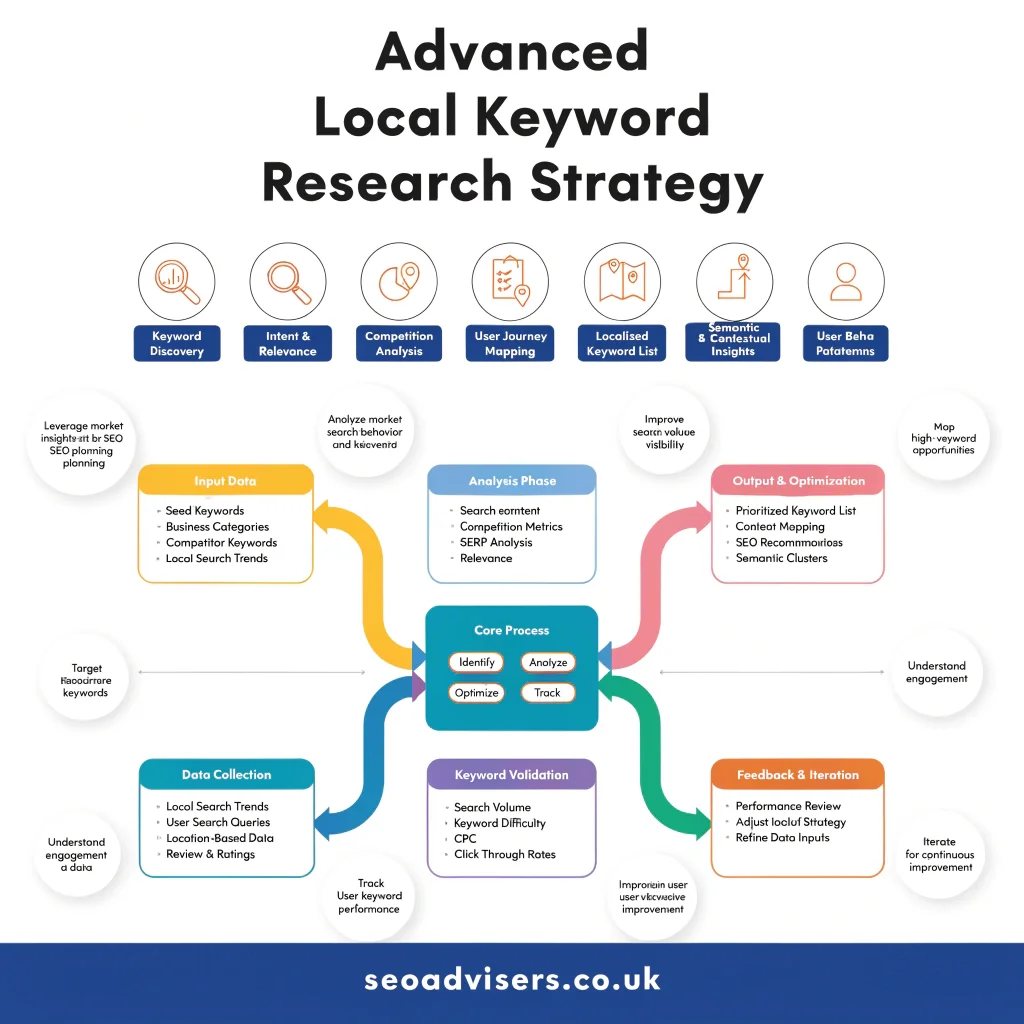
Keyword research determines visibility.
Service Plus Location Keywords
Examples:
- SEO agency in Manchester
- Emergency plumber Birmingham
- Best dentist in Chicago
These capture transactional intent.
Neighborhood and Zip Code Modifiers
Adding micro location improves targeting.
Example:
- Hair salon in Brooklyn Heights
- HVAC service 77002
Near Me Optimization Strategy
Near me queries rely on proximity signals and GBP strength rather than exact keyword placement.
Zero Search Volume Keywords That Convert
Many high converting phrases show low volume in tools but drive leads.
Examples:
- Affordable tax consultant near city center
- Emergency electrician open Sunday
Keyword Intent Table
| Intent Type | Keyword Example |
| Informational | local SEO checklist |
| Commercial | local SEO services |
| Transactional | top rated plumber near me |
| Navigational | Google Maps local ranking keywords |
Balancing all intent levels builds topical authority.
Google Business Profile Optimization Blueprint
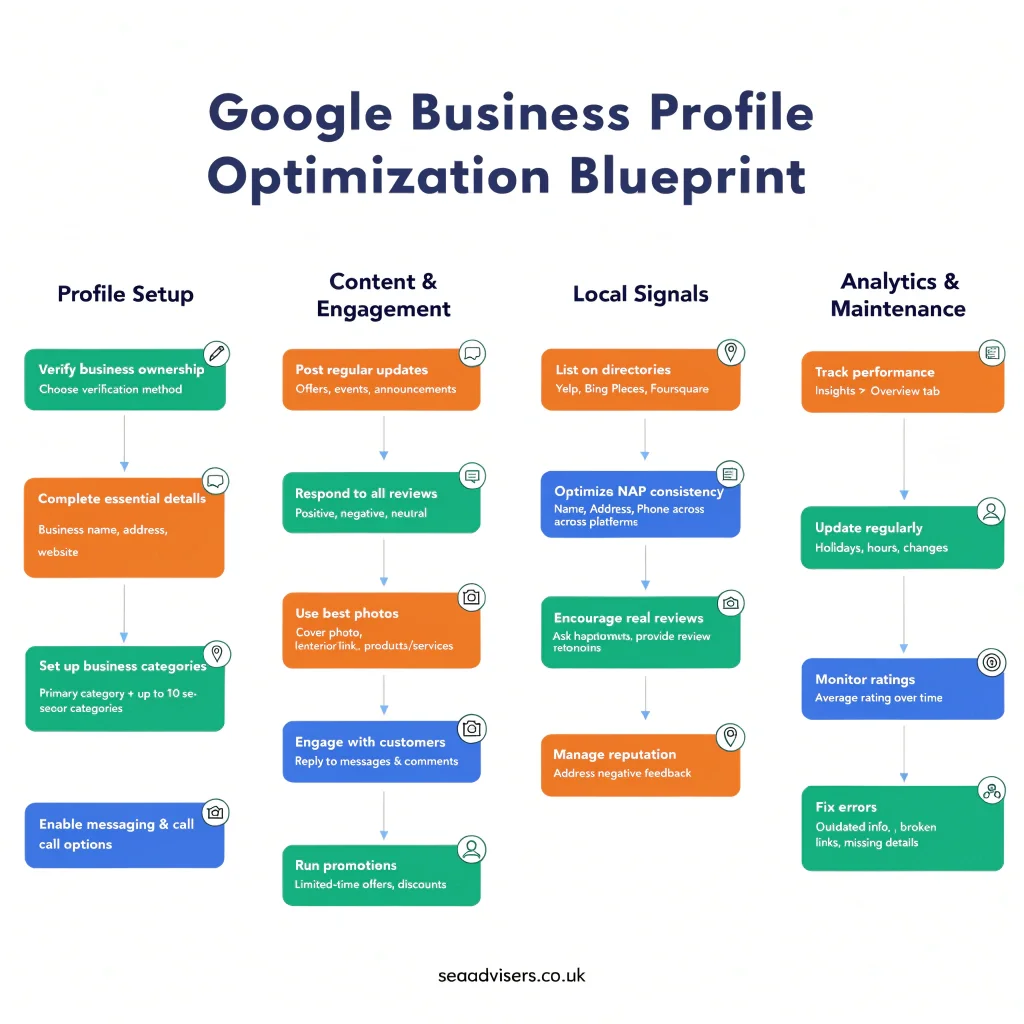
Google Business Profile optimization directly affects Map Pack visibility.
Category Selection Strategy
Choose:
- One primary category
- Multiple secondary categories
- Service level attributes
Services and Product Optimization
List services individually using:
- Service plus city modifiers
- Commercial keywords
- Clear descriptions
Posting Strategy
Post weekly:
- Offers
- Updates
- Events
- FAQs
This signals activity.
Image Optimization
Upload:
- Geo relevant images
- Team photos
- Service photos
- Location interior
Rename files descriptively before upload.
Review Response Framework
Respond using:
- Gratitude
- Service mention
- Location mention
Example: Thank you for choosing our HVAC service in Dallas.
On Page Local SEO Framework
Strong location pages increase organic rankings.
Location Landing Page Structure
Each page should include:
- Unique content
- Service area descriptions
- Testimonials
- Call to action
Internal Linking for Multi Location Sites
Use silo structure.
Example:
- Home
Service page
City page
Neighborhood page
Schema Markup Implementation
Use:
- LocalBusiness schema
- FAQ schema
- Review schema
This enhances rich results.
Local Content Silo Strategy
Create blog clusters:
- City specific guides
- Neighborhood resource posts
- Industry relevant updates
This builds topical authority.
Citation Building and NAP Consistency
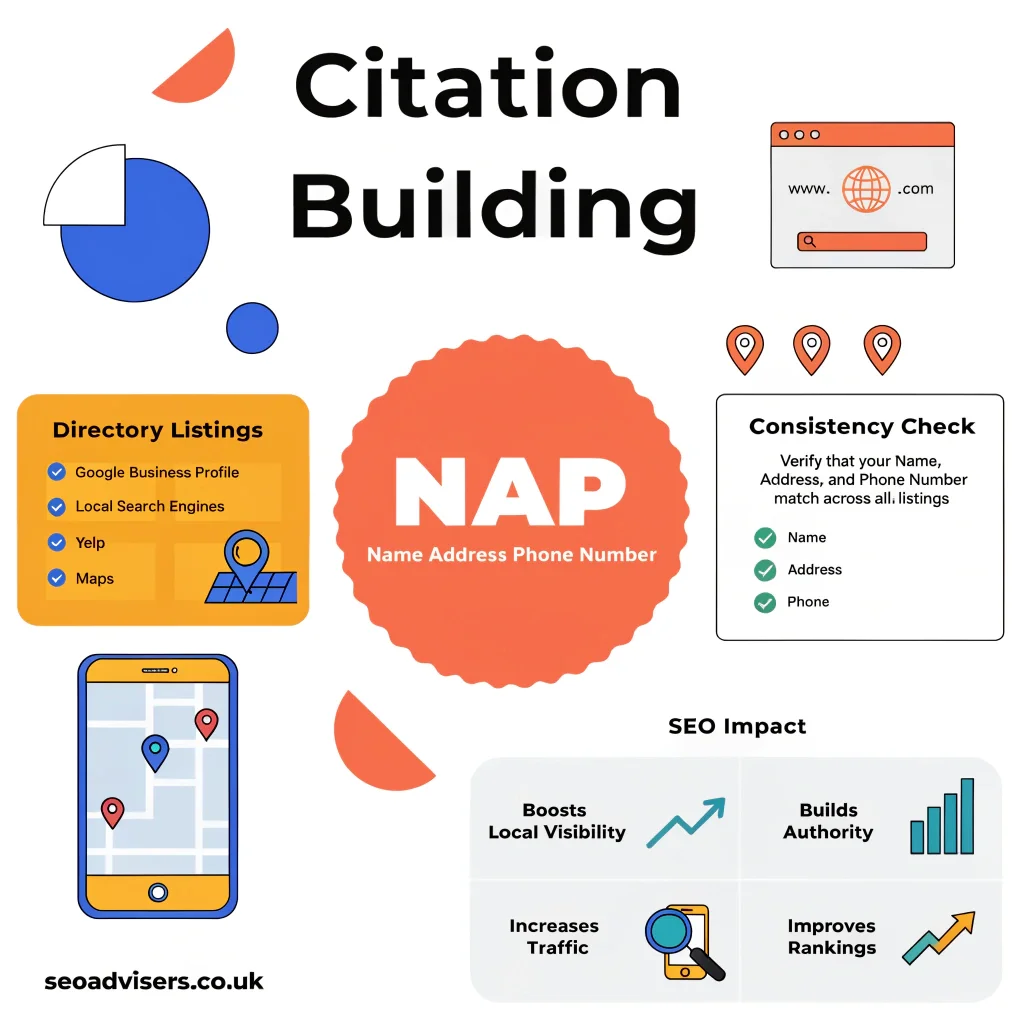
NAP stands for Name Address Phone.
Consistency across directories prevents confusion.
Citation Audit Process
- Identify existing listings
- Correct inconsistencies
- Remove duplicates
- Submit to relevant directories
Data Aggregator Strategy
Submit business data to aggregators to distribute information across platforms.
Local Link Building Strategy
Backlinks remain powerful.
Local PR Campaigns
Sponsor events
Host webinars
Issue press releases
Community Partnerships
Collaborate with:
- Local influencers
- Charities
- Business associations
Resource Page Outreach
Find pages listing local services and request inclusion.
Advanced Tactics for Competitive Advantage
Voice Search Optimization
Use conversational keywords such as:
- Where can I find a dentist nearby
- Best Italian restaurant near city center
AI and Search Evolution
AI overviews may summarize content. Structured data and clear answers increase inclusion chances.
Entity Based Optimization
Build entity authority through:
- Consistent brand mentions
- Structured data
- Knowledge panel reinforcement
Click Optimization Strategy
Improve CTR by:
- Optimizing GBP photos
- Encouraging reviews
- Using compelling meta titles
Multi Location and Franchise Strategy
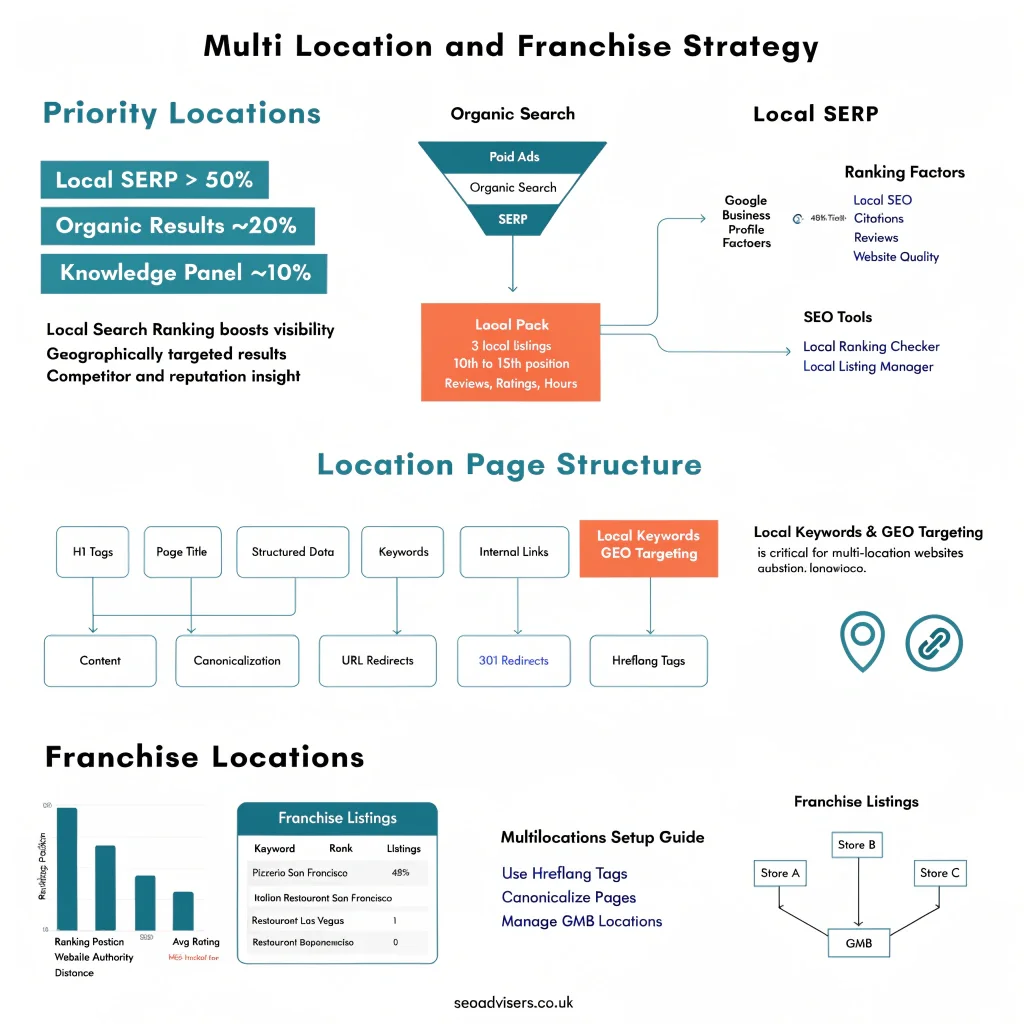
Large businesses require structured hierarchy.
Avoid Duplicate Content
Each location page must contain unique details such as:
- Staff profiles
- Community references
- Testimonials
Centralized vs Decentralized Approach
Central control ensures consistency. Local managers ensure personalization.
Measuring Success and ROI
Tracking is critical.
Metrics to Monitor
| Metric | Tool |
| Map Pack ranking | Rank tracking software |
| Organic local ranking | Search console |
| Clicks and impressions | Google Search Console |
| Calls and direction requests | GBP insights |
| Conversion rate | Analytics |
Calculating ROI
Formula:
Revenue from local leads divided by SEO investment.
Track:
- Cost per lead
- Customer lifetime value
- Conversion rate from calls
Common Mistakes That Kill Rankings
- Keyword stuffing city names
- Ignoring mobile optimization
- Inconsistent citations
- Buying fake reviews
- Thin location pages
Avoiding these preserves trust and authority.
Practical Local SEO Checklist
| Task | Completed |
| Google Business Profile optimized | |
| Location pages created | |
| Schema markup implemented | |
| Citation audit completed | |
| Review strategy active | |
| Local backlinks acquired | |
| Analytics tracking configured |
Use this as an implementation guide.
Conclusion
Local visibility requires strategic alignment between Google Business Profile optimization, on page SEO, citations, reviews, backlinks, and behavioral signals. Businesses that build authority, maintain NAP consistency, implement structured schema markup, and continuously monitor performance create sustainable dominance in local search results.
If implemented correctly, this blueprint positions your brand ahead of competitors and captures high intent customers consistently.
Frequency Asked Questions About Local SEO
Q1. What keywords should I target for local SEO?
Target service plus city keywords, neighborhood modifiers, near me phrases, and commercial intent keywords.
Q2. How long does it take to rank locally?
Typically three to six months depending on competition, authority, and consistency.
Q3. Does schema markup help local rankings?
Schema improves search understanding and enhances visibility through rich results.