Search engines are constantly evolving to reward content that is helpful, trustworthy, and authoritative. The concept of E-E-A-T, which stands for Experience, Expertise, Authoritativeness, and Trustworthiness, has become a cornerstone of modern SEO. By following E-E-A-T principles, content creators, bloggers, and businesses can improve search engine visibility, user engagement, and credibility. Understanding E-E-A-T is not just about SEO rankings; it is about building trust with your audience and providing content that genuinely helps users.
Each component of E-E-A-T, show why it matters, provide actionable tips for content optimization, and offer examples that illustrate high-quality E-E-A-T content. By the end of this article, you will have a clear strategy for implementing E-E-A-T and improving the performance of your website.
Understanding E-E-A-T Components
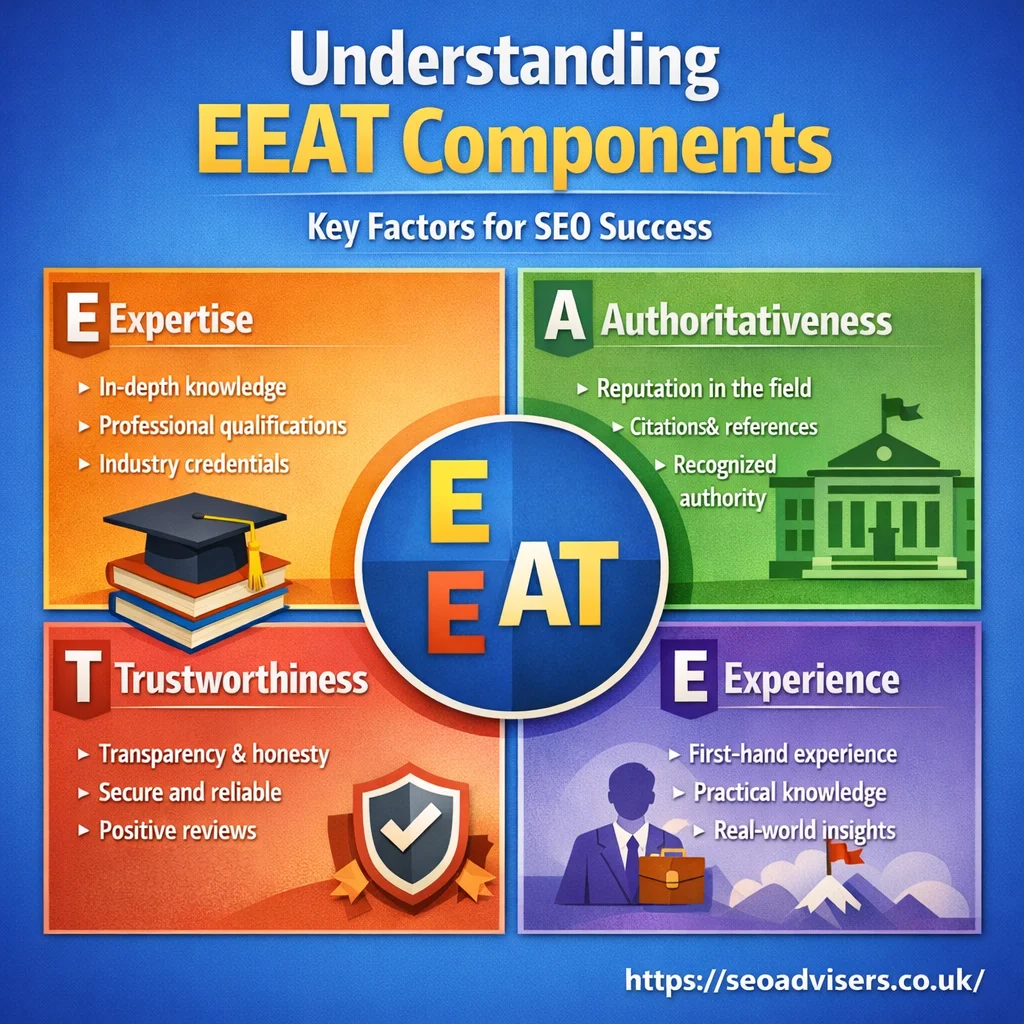
E-E-A-T consists of four critical elements that collectively determine the perceived quality and reliability of content. Each component plays a unique role in building a website’s credibility and authority.
Experience
Experience is about first-hand knowledge and practical application. Search engines prefer content created by someone who has real experience in the topic being discussed. Demonstrating experience can improve trust and engagement.
Ways to show experience:
- Writing personal stories or real case studies
- Providing tutorials or step-by-step guides based on actual implementation
- Offering detailed product or service reviews grounded in firsthand use
Experience helps users see that the content is based on genuine knowledge rather than theory alone.
Expertise
Expertise refers to the depth of knowledge in a particular field. It shows that the author understands the topic and can provide accurate and valuable insights.
Ways to highlight expertise:
- Listing qualifications, degrees, certifications, and professional experience
- Providing research-backed data and industry-specific insights
- Publishing long-form content that demonstrates understanding of complex topics
Expertise is particularly important for YMYL content, which includes financial, health, and legal information.
Authoritativeness
Authoritativeness measures the credibility and recognition of both the author and the website. A website that is recognized as a trusted source in its industry signals reliability to both users and search engines.
Ways to build authority:
- Earning backlinks from reputable websites
- Being referenced in industry publications or media outlets
- Consistently producing high-quality, accurate, and informative content
Authoritativeness not only boosts search engine trust but also increases user confidence.
Trustworthiness
Trustworthiness is the foundation of E-E-A-T. Without trust, other elements lose their impact. Users need to feel confident that the information is accurate and reliable.
Ways to establish trustworthiness:
- Displaying clear author and company information
- Using HTTPS for website security
- Citing accurate sources and providing verifiable data
- Encouraging positive reviews and testimonials
E-E-A-T in the Modern SEO Landscape
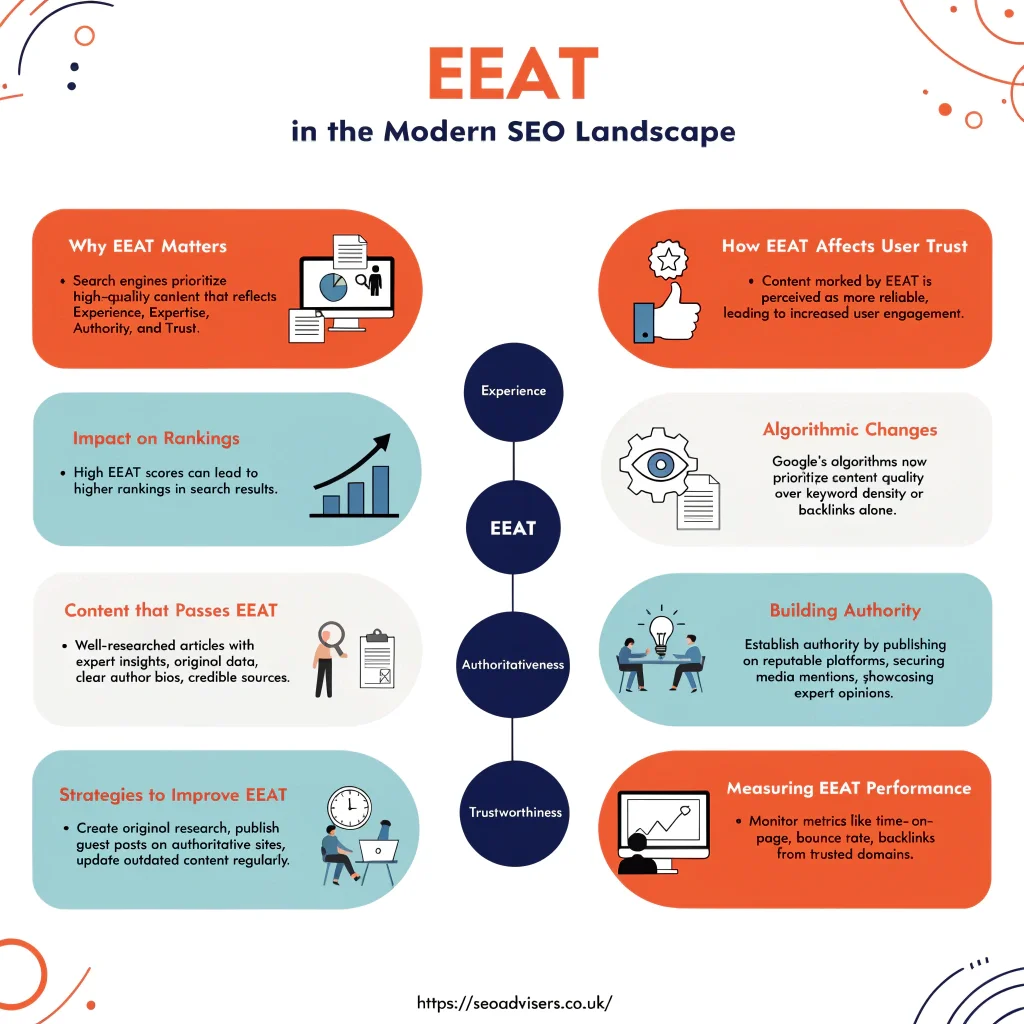
E-E-A-T has become increasingly important because search engines now prioritize content that demonstrates value, accuracy, and trust. While E-E-A-T is not a direct ranking factor, it influences metrics like engagement, backlinks, and content quality, which indirectly affect SEO performance.
E-E-A-T is particularly essential for YMYL content because topics that affect users’ health, finances, or safety require higher trust and credibility. Websites that fail to demonstrate strong E-E-A-T can experience lower rankings and decreased user trust.
Common Misconceptions About E-E-A-T
Many content creators believe that E-E-A-T only applies to complex topics or technical industries. In reality, E-E-A-T benefits all types of websites, including blogs, e-commerce sites, and lifestyle content. Even non-YMYL websites gain from showcasing experience, expertise, authority, and trustworthiness because users prefer reliable sources.
E-E-A-T Best Practices
Improving E-E-A-T requires a combination of content quality, author credibility, and website trust signals. Following these best practices can help optimize your website content for both users and search engines:
- Author Bios: Provide detailed author information with credentials and relevant experience
- High-Quality References: Include links to authoritative sources to back your claims
- Structured Content: Use clear headings, bullet points, and tables for readability
- Practical Examples: Include case studies, tutorials, or product reviews to show experience
- User Engagement: Encourage reviews, testimonials, and social interaction to enhance trustworthiness
Table: E-E-A-T Best Practices at a Glance
| E-E-A-T Component | Best Practices | Examples |
| Experience | Show first-hand knowledge | Case studies, tutorials, product reviews |
| Expertise | Highlight skills and credentials | Degrees, certifications, professional experience |
| Authoritativeness | Build credibility | Backlinks, media mentions, citations |
| Trustworthiness | Establish user confidence | HTTPS, transparent info, verified data |
E-E-A-T Implementation Strategy
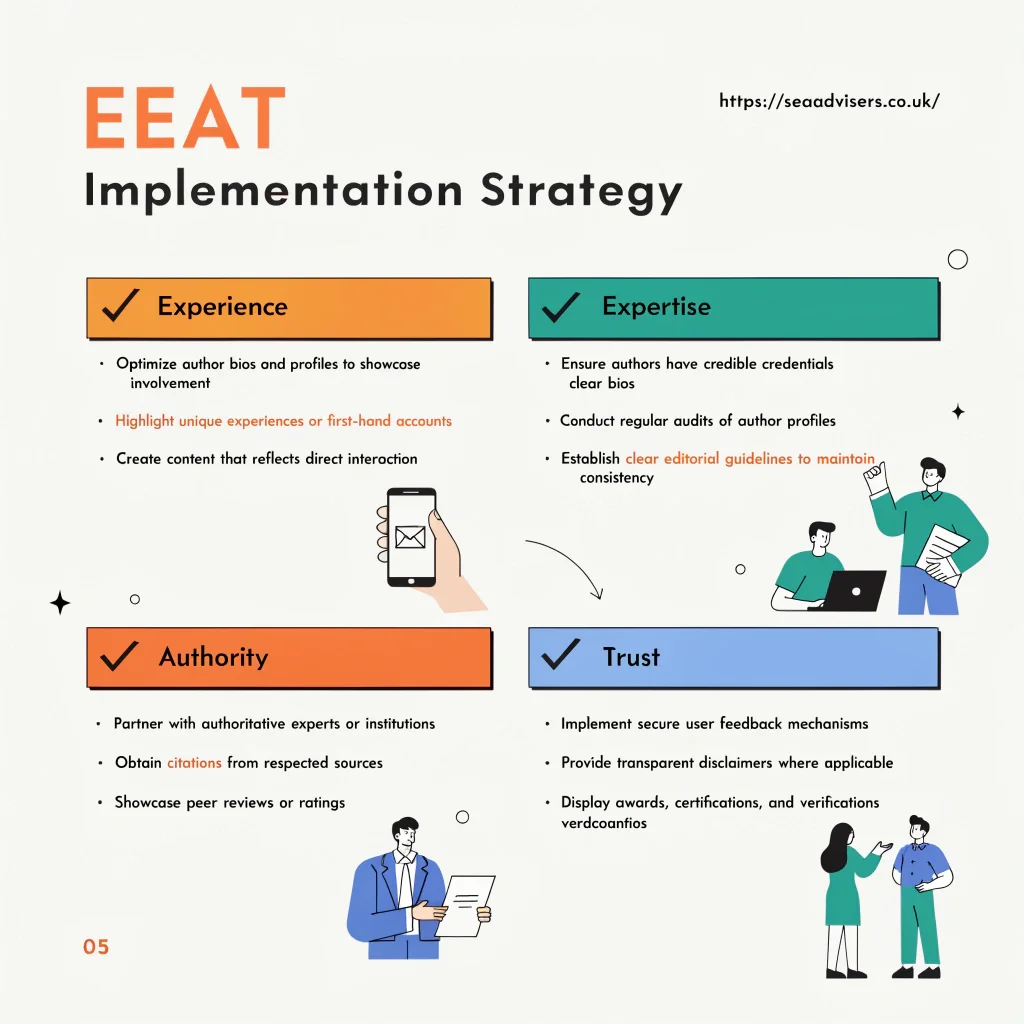
Implementing E-E-A-T involves a systematic approach to optimize both existing and new content.
Step 1: Conduct a Content Audit
- Review all pages for credibility, accuracy, and completeness
- Identify content lacking author information or verified references
- Highlight pages missing practical examples or first-hand experience
Step 2: Update Author Information
- Include author bios for all content pieces
- List relevant qualifications, certifications, and industry experience
Step 3: Improve References and Sources
- Add citations from authoritative websites, studies, and industry publications
- Include links to high-quality resources to enhance credibility
Step 4: Demonstrate Practical Experience
- Add real-world examples to support concepts
- Include testimonials and case studies to provide social proof
Step 5: Monitor and Adjust
- Track engagement metrics such as time On Page SEO, bounce rate, and conversions
- Regularly update content to reflect new trends, research, or user feedback
Case Studies and Examples
Several high-performing websites effectively apply E-E-A-T principles:
- Health blogs providing author credentials and referencing medical studies
- Finance websites citing verified statistics and offering expert advice
- E-commerce sites including detailed reviews and ratings
Implementing E-E-A-T not only boosts SEO but also builds long-term trust with users.
Advanced E-E-A-T Tactics
Beyond basic implementation, there are advanced strategies to further enhance E-E-A-T:
- E-E-A-T in Multimedia Content: Include videos, infographics, and podcasts to demonstrate expertise and experience
- Social Proof: Showcase testimonials, reviews, and social mentions to improve trustworthiness
- UX Optimization: Enhance readability, navigation, and mobile responsiveness to strengthen user confidence
These strategies are often overlooked by competitors, giving your content a competitive advantage.
Conclusion: E-E-A-T
E-E-A-T is essential for creating content that is both user-focused and optimized for search engines. By incorporating experience, expertise, authority, and trustworthiness, you can improve the credibility, engagement, and SEO performance of your website.
Implementing E-E-A-T best practices, performing audits, and applying advanced tactics like multimedia content and social proof will help you stand out in a competitive online landscape.
Start using E-E-A-T principles today to ensure your content provides value, builds trust, and achieves long-term SEO success.
Frequency Asked Questions About E-E-A-T
Q1. How can I demonstrate first-hand experience for E-E-A-T?
Include case studies, tutorials, personal stories, and product reviews that show real-world application.
Q2. What is the difference between experience and expertise?
Experience is practical knowledge gained through action, while expertise is deeper understanding validated by credentials or professional recognition.
Q3. Do non-YMYL websites need E-E-A-T?
Yes. Even blogs and e-commerce websites benefit from demonstrating trust, authority, and experience.
Q4. How often should E-E-A-T signals be updated?
Regular updates to content, author information, and references help maintain trust and relevance.
Q5. Can E-E-A-T impact Google rankings directly?
E-E-A-T is not a direct ranking factor, but content that demonstrates E-E-A-T earns trust, engagement, and backlinks, which improve SEO performance.